Introduction
Back pain has become a common concern for people with different lifestyles and age groups. Whether you spend long hours working at a desk, travelling every day, managing household responsibilities or sitting for extended periods, your back can experience considerable strain.
In a city like Lucknow, where working professionals, students, business owners and families manage increasingly busy schedules, finding time for physical activity can sometimes be difficult.
People living in areas such as Gomti Nagar, Aliganj, Indira Nagar, Hazratganj and Jankipuram may also have different daily routines, but one thing remains important: taking care of your back should be part of your everyday health routine.
Yoga is one approach that combines gentle movement, stretching, breathing and body awareness. Research suggests that yoga may provide modest benefits for some adults experiencing chronic lower back pain, particularly when compared with no exercise.
However, yoga is not a guaranteed treatment for every type of back pain. The right exercises depend on the cause of discomfort, physical ability and individual health conditions.
In this guide, we will explore how yoga may support back health, eight gentle yoga poses, common mistakes and practical tips for developing a safer routine.
Understanding the Common Causes of Back Pain
Back pain can develop for several reasons. Sometimes it starts suddenly after lifting something heavy, while in other cases it develops gradually over time.
Some common contributing factors include:
Sitting for long hours without movement.
Poorly adjusted workstations.
Sudden or excessive physical activity.
Muscle strain.
Limited physical activity.
Repeated bending or lifting.
Certain spinal or medical conditions.
It is important to understand that not all back pain has the same cause.
For example, discomfort caused by muscle strain may require a different approach from pain associated with a slipped disc, nerve compression or an inflammatory condition.
If back pain is persistent, severe or accompanied by other symptoms, seek medical assessment before beginning a new yoga routine.
How Can Yoga Help With Back Pain?
Yoga combines controlled movements, stretching, strengthening exercises and relaxation.
For selected adults with chronic, non-specific lower back pain, research suggests yoga may offer small improvements in pain and physical function compared with doing no exercise.
According to the National Center for Complementary and Integrative Health (NCCIH), research involving people with lower back pain has found modest benefits from yoga, although it is not clearly superior to other forms of exercise.
Here are some ways an appropriately adapted yoga practice may support back health.
1. Improves Flexibility
Gentle movements can help maintain flexibility around the hips, back and surrounding muscles.
Improved mobility may make everyday movements more comfortable.
2. Strengthens Supporting Muscles
Certain yoga postures engage the abdominal, hip and back muscles.
Developing strength in these areas can support better movement and physical stability.
3. Encourages Better Posture Awareness
Yoga encourages you to pay attention to your spine, shoulders and body alignment.
This awareness may help you identify habits that place unnecessary strain on your back.
4. Helps Manage Stress
Ongoing stress can influence how people experience and cope with pain.
Breathing exercises and relaxation practices may help improve mental well-being and support pain management.
5. Encourages Regular Physical Activity
People who spend most of their day sitting may benefit from incorporating suitable movement into their routine.
Regular activity is an important part of maintaining overall back health.
8 Gentle Yoga Poses for Back Health
The following poses are examples of movements that may be included in a suitable yoga routine. They are not appropriate for every type of back pain.
Choose movements according to your condition and professional guidance. Avoid any posture that increases pain, causes tingling or produces discomfort down your legs.
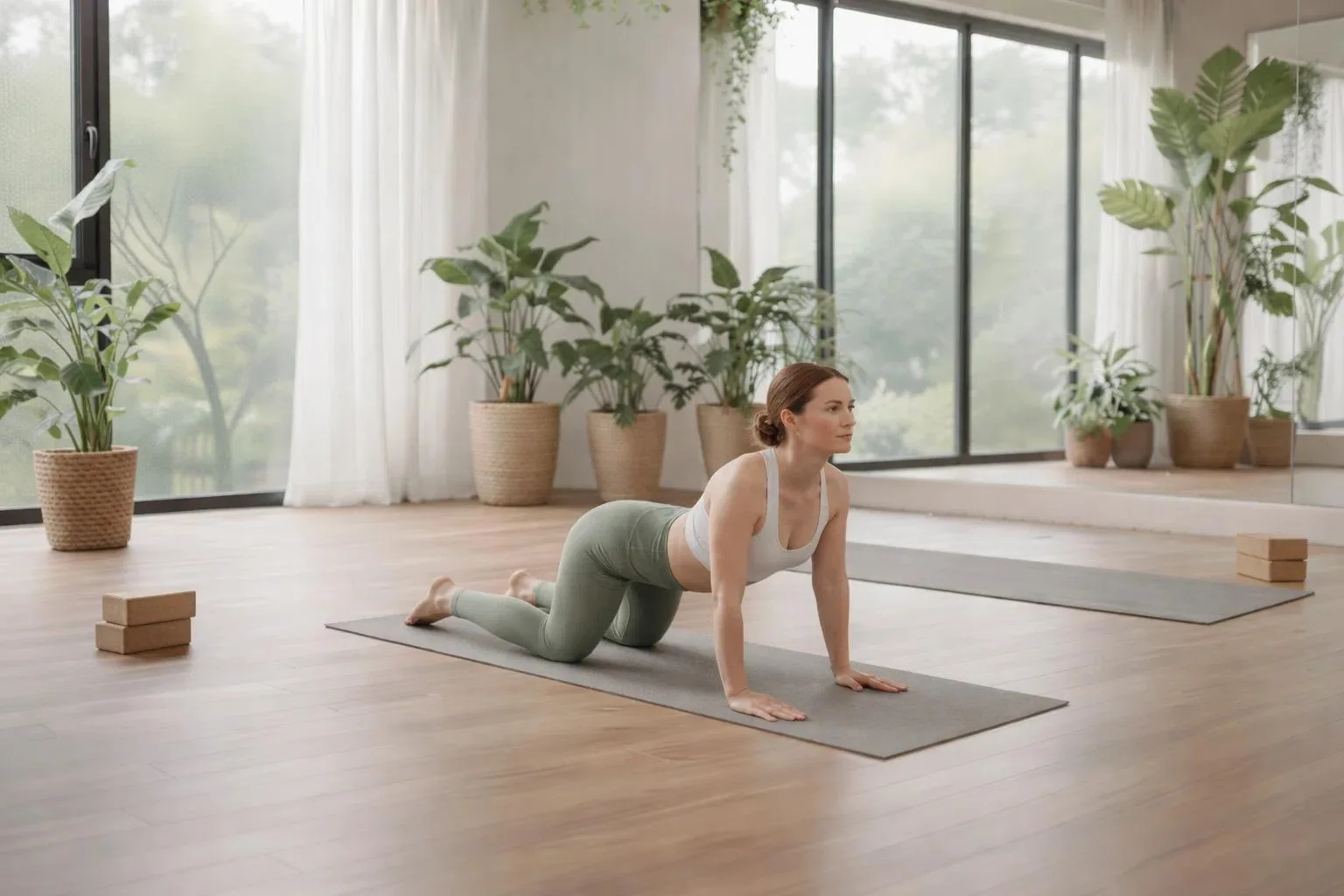
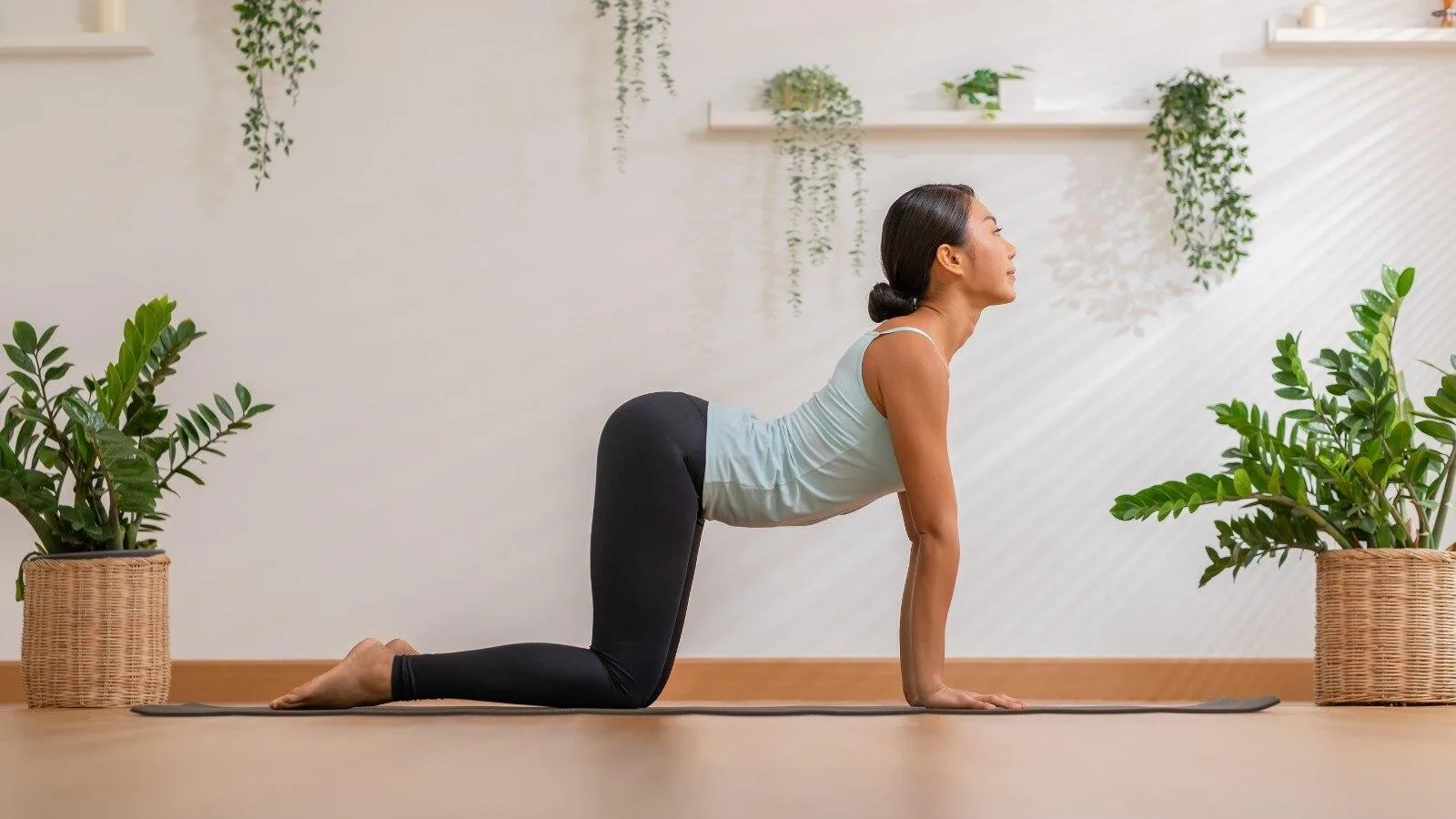
1. Marjaryasana-Bitilasana (Cat-Cow Pose)
Cat-Cow is a gentle movement that alternates between rounding and extending the spine.
It can help introduce controlled spinal movement into a yoga routine.
How to practice:
Begin on your hands and knees.
Keep your wrists approximately under your shoulders.
Inhale and gently lift your chest.
Exhale and slowly round your back.
Repeat within a comfortable range of movement.
Why include it?
It encourages spinal mobility and body awareness.
2. Balasana (Child's Pose)
Child's Pose is a resting posture that gently stretches the back and hips.
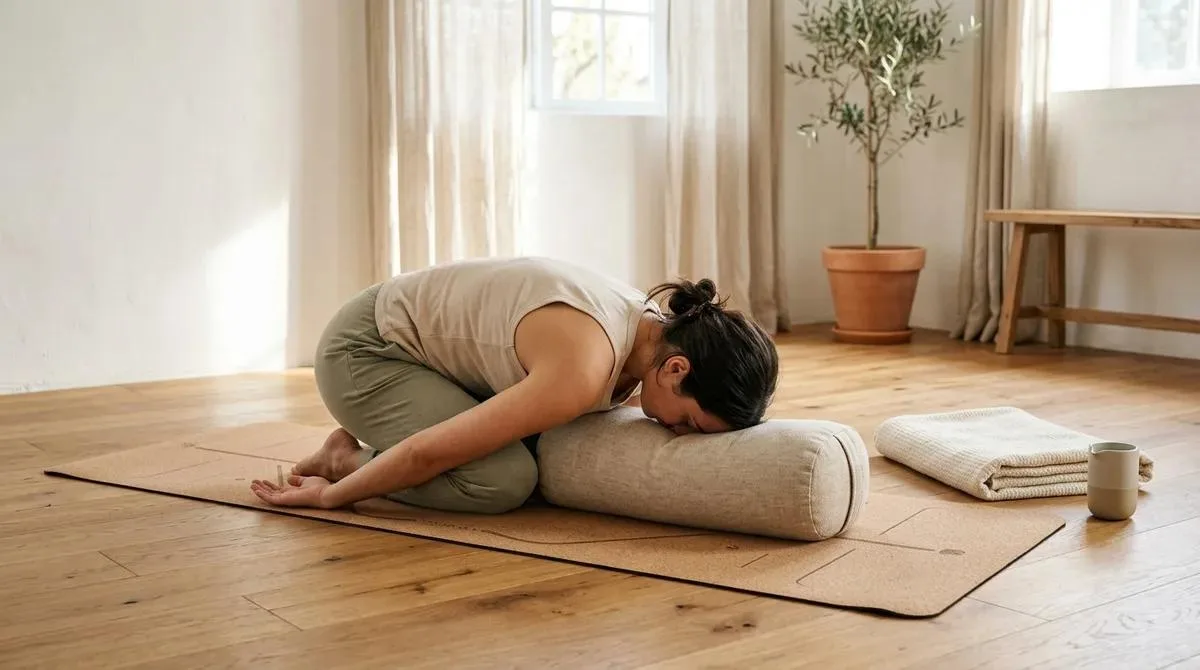
How to practice:
Begin on your hands and knees.
Slowly move your hips towards your heels.
Extend your arms comfortably forward.
Rest your forehead on a cushion or mat if comfortable.
Breathe naturally.
Why include it?
It offers a gentle resting position between other movements.
Modification: Place a cushion between your thighs and calves if needed. Avoid forcing the hips towards the heels.
3. Tadasana (Mountain Pose)
Tadasana is a standing posture that encourages awareness of body alignment.
How to practice:
Stand with your feet comfortably apart.
Distribute your weight evenly across both feet.
Relax your shoulders.
Keep your spine in a comfortable neutral position.
Breathe naturally.
Why include it?
It helps develop awareness of standing posture and balance.
4. Bhujangasana (Cobra Pose)
Cobra Pose involves gently lifting the chest while lying on the stomach.
It may be suitable for some people, but back-extension movements can aggravate certain conditions.
How to practice:
Lie on your stomach.
Place your palms near your shoulders.
Keep your elbows close to your body.
Gently lift your chest only as far as comfortable.
Lower slowly.
Important: Avoid this pose if it increases back pain or causes symptoms to spread into your legs.
5. Setu Bandhasana (Bridge Pose)
Bridge Pose engages the glutes and muscles around the hips.
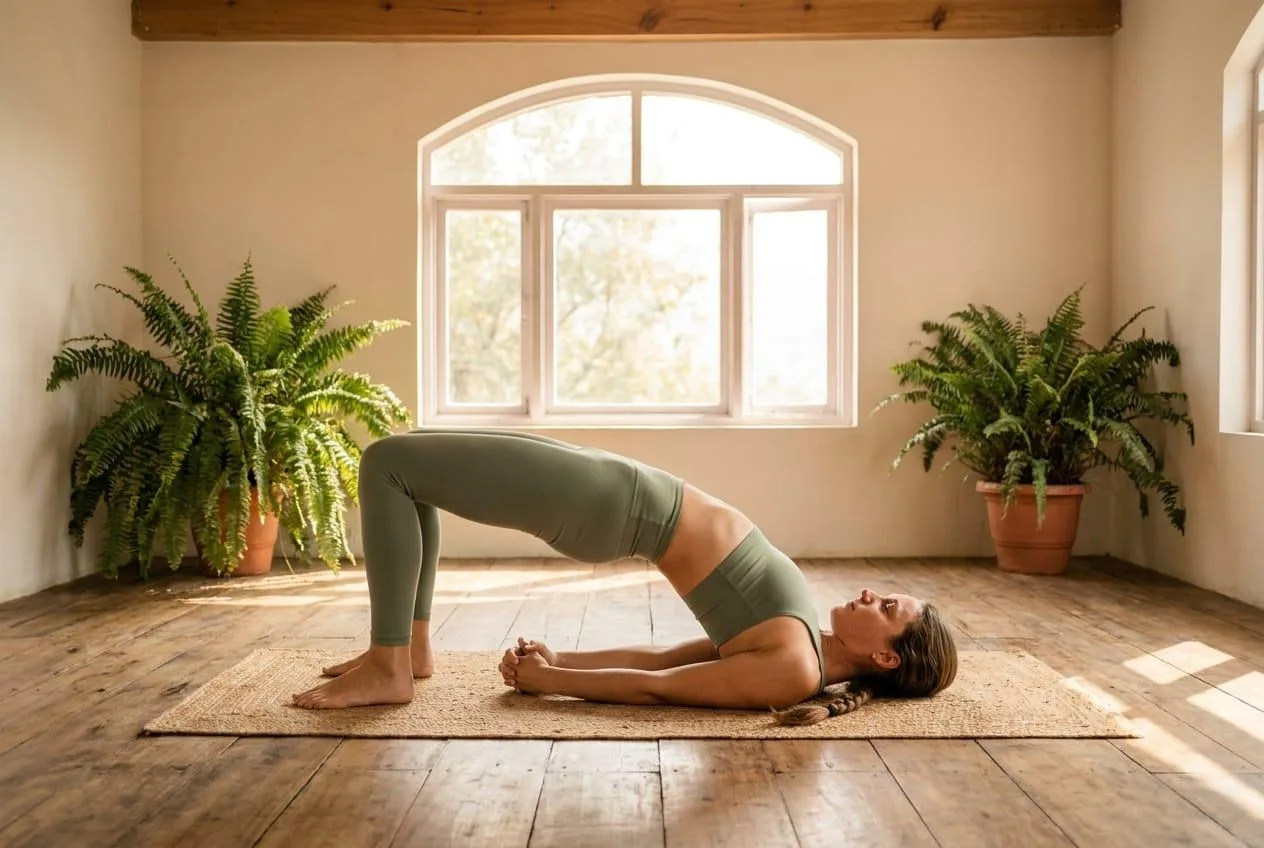
How to practice:
Lie on your back with your knees bent.
Keep your feet flat on the mat.
Place your arms beside your body.
Gently lift your hips if comfortable.
Lower slowly.
Why include it?
It can help develop strength around the hips and gluteal muscles.
6. Supta Padangusthasana (Reclining Hand-to-Big-Toe Pose)
This posture involves a controlled leg stretch while lying on your back.
How to practice:
Lie on your back.
Keep one knee bent or the other leg comfortably extended.
Raise one leg gently.
Use a yoga strap around your foot if needed.
Avoid pulling the leg forcefully.
Why include it?
It may help maintain flexibility in the back of the legs.
7. Gentle Pelvic Tilts
Pelvic tilts are simple movements that help develop awareness of the pelvis and lower abdominal muscles.
How to practice:
Lie on your back with your knees bent.
Keep your feet flat on the floor.
Gently engage your abdominal muscles.
Slightly tilt your pelvis without forcing your lower back.
Relax and repeat comfortably.
Why include it?
It introduces controlled movement around the lower back and pelvis.
8. Gentle Supine Relaxation
Lie comfortably on your back with your knees supported by a cushion if needed.
Allow your shoulders and legs to relax while breathing naturally.
Why include it?
Relaxation provides an opportunity to reduce unnecessary muscle tension and finish your practice calmly.
A Gentle 15-Minute Yoga Routine for Beginners
If you have been advised that gentle exercise is appropriate for your back, a short routine may be easier to maintain than a demanding workout.
| Practice | Duration |
|---|---|
| Comfortable Breathing | 2 minutes |
| Cat-Cow | 2 minutes |
| Tadasana | 2 minutes |
| Gentle Pelvic Tilts | 2 minutes |
| Supported Child's Pose | 2 minutes |
| Gentle Leg Stretch | 2 minutes |
| Relaxation | 3 minutes |
This is an example of a gentle movement routine, not a prescribed treatment for back pain. Modify or skip movements according to your symptoms and professional advice.
Back Pain and Long Sitting Hours: A Common Lifestyle Challenge in Lucknow
Many working professionals and students in Lucknow spend several hours sitting at desks, attending online meetings, studying or travelling.
Staying in the same position for extended periods can contribute to stiffness and discomfort.
Consider these practical habits:
Take Regular Movement Breaks
Stand up and move around periodically instead of remaining seated continuously.
Adjust Your Workstation
Keep your screen at a comfortable height and arrange your chair so your feet can rest comfortably.
Avoid Repeated Heavy Lifting
When lifting objects, avoid sudden twisting and excessive strain.
Include Comfortable Walking
Walking is a simple way to incorporate physical activity into your daily routine.
Pay Attention to Your Sleeping Position
Choose a comfortable sleeping arrangement that allows you to rest without unnecessary discomfort.
Common Yoga Mistakes to Avoid When Experiencing Back Pain
1. Forcing Deep Forward Bends
Deep forward bends may aggravate symptoms in some people. Avoid pushing beyond your comfortable range.
2. Attempting Advanced Backbends
Advanced backbends can place considerable demands on the spine. They should not be attempted simply because they appear in general yoga routines.
3. Ignoring Pain Signals
Pain that increases during a pose is a reason to stop and reassess the movement.
4. Following Random Online Yoga Videos
Not every online yoga routine is suitable for every back condition.
Choose instruction that considers your individual needs.
5. Assuming All Back Pain Can Be Fixed With Yoga
Back pain may have several causes. Some require medical assessment, physiotherapy or other forms of treatment.
When Should You See a Doctor Before Practicing Yoga?
Back pain should not always be treated as a simple muscle problem.
Seek medical advice if your pain is persistent, worsening, interfering with daily activities or accompanied by unexplained weight loss, fever or other unusual symptoms.
Seek emergency medical attention if back pain is accompanied by:
New weakness, tingling or numbness in both legs.
Loss of sensation around the genitals or anus.
New difficulty controlling your bladder or bowel.
Back pain following a serious accident.
Associated chest pain.
These symptoms can indicate serious medical conditions and should not be managed through yoga.
Yoga Classes in Lucknow: Home Yoga or Online Yoga?
If you live in Lucknow and want to develop a regular yoga routine, choosing a convenient learning format can make a difference.
Home yoga sessions may be suitable for people who prefer practicing in their own surroundings.
Book Now Online Yoga Classes can be an option for those who want guided sessions without travelling.
Before selecting a trainer, consider:
Relevant yoga training and qualifications.
Experience working with beginners.
Understanding of movement modifications.
Ability to recognize when a pose should be avoided.
Willingness to work alongside medical or physiotherapy guidance when necessary.
If you have a diagnosed spinal condition or persistent pain, consult your healthcare professional before starting and choose an appropriately experienced instructor.
Om Mantra Yoga provides 🔗 Home Yoga Trainer in Lucknow home and online yoga services through its trainer network, subject to trainer availability in the selected location.
Conclusion
Taking care of your back is not about performing difficult yoga poses or stretching as much as possible.
It is about understanding your body, developing healthy movement habits and choosing exercises that suit your individual needs.
For people living in Lucknow, small lifestyle changes such as regular movement breaks, comfortable walking, appropriate exercise and better posture awareness can be useful steps towards maintaining back health.
Yoga may become a valuable part of that routine when practiced safely and consistently.
Start gently, avoid movements that aggravate your symptoms and seek professional advice whenever necessary.
Remember, the goal is not to push your body through discomfort. It is to build a healthier and more confident relationship with movement.
Begin Your Yoga Journey With Om Mantra Yoga
Looking for Home Yoga Classes or Online Yoga Sessions in Lucknow?
Om Mantra Yoga connects individuals with yoga trainers for personalized yoga sessions, beginner-friendly routines, meditation, pranayama and general wellness practices.
If you are experiencing back discomfort, discuss your needs with a healthcare professional before starting a new routine and choose suitable guidance.
Connect with Om Mantra Yoga and take an informed step towards a healthier lifestyle.
Book Free Consultation
Looking for personalized yoga guidance? Connect with Om Mantra Yoga to explore Home Yoga and Online Yoga options in Lucknow, subject to trainer availability.
Book Free ConsultationFrequently Asked Questions
Is yoga good for back pain in Lucknow?
Which yoga is best for lower back pain?
Can beginners practice yoga for back pain at home?
Can yoga help people who work long hours in offices?
How often should I practice yoga for back health?
Are home yoga classes available in Lucknow?
Can yoga cure a slipped disc?
Is online yoga suitable for people with back pain?
Need a Yoga Trainer?
Apni requirement bhejiye, Om Mantra Yoga team aapse contact karegi.